CAG

Why does even a small rise in Earth's temperature matter so much?

Thu, 21/05/2026 - 10:01

A rise of just 1°C or 2°C may sound small — but for the Earth’s climate system, it represents an enormous increase in trapped heat energy.

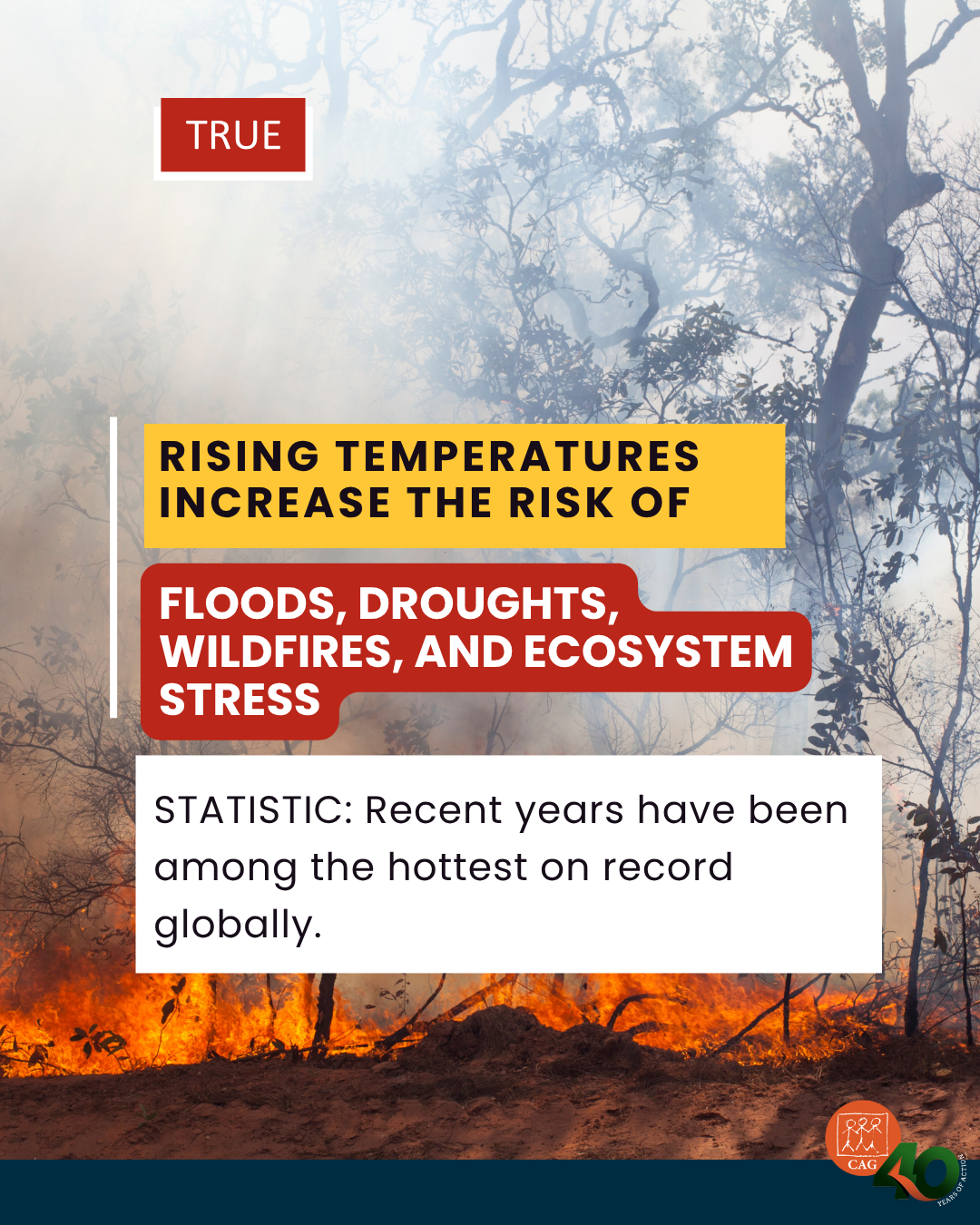
That extra heat influences everything from stronger heatwaves and melting ice to changing rainfall patterns and warming oceans. Climate change isn’t only about hotter weather — it’s about how interconnected systems across the planet respond to even small shifts in temperature.

Understanding that scale helps explain why scientists are deeply concerned about “small” temperature increases.

Urban areas might be significantly hotter than nearby rural regions

Thu, 14/05/2026 - 10:02

/*-->*/ /*-->*/ /*-->*/

Climate change is not experienced equally everywhere — cities often feel its effects more intensely. Dense construction, concrete surfaces, traffic, and limited green cover trap and retain heat, making urban areas significantly hotter than nearby rural regions. Understanding this is essential to building cooler, healthier, and more climate-resilient cities.

World Earth Day

Wed, 22/04/2026 - 10:12

The future of our #planet lies in the choices we make today. Our power is not only in the #energy we generate, but in the responsibility we carry, to protect natural resources, strengthen #climateresilience, and build systems that work for both #people and the planet. When communities, institutions, and individuals act with purpose, lasting change becomes possible.

Be climate smart - heat and the air we breathe

Thu, 09/04/2026 - 09:57

/*-->*/ /*-->*/ /*-->*/

As temperatures rise, pollution doesn’t just increase, it becomes more harmful. Heat and sunlight can turn everyday emissions into gases like Ground-level ozone, while trapping them closer to where we live and breathe.

Climate change can worsen air quality, making it even more important to cut pollution at the source and protect public health.

Understanding climate change - Disease outbreaks?

Thu, 19/03/2026 - 09:52

Extreme weather events don’t just cause damage — they can disrupt water, sanitation, housing, and healthcare systems, creating high-risk conditions for disease spread, especially in overcrowded or displaced communities.

These conditions can increase diseases such as Cholera, Leptospirosis, and respiratory infections, highlighting the serious public health risks of climate-related disasters.

Why does climate change cause flooding?

Thu, 26/02/2026 - 09:59

Think climate change just means hotter days? Think again. 

When the planet warms, the whole water system goes into overdrive. Warmer air holds more moisture — so when it rains, it often pours. Short, intense downpours can overwhelm roads, drains, and rivers in minutes. 

At the same time, warmer oceans power stronger storms, bringing heavier rain and bigger storm surges. And rising sea levels mean coastal areas flood more easily — sometimes even during normal tides. 

More heat doesn’t just mean more sweat.